

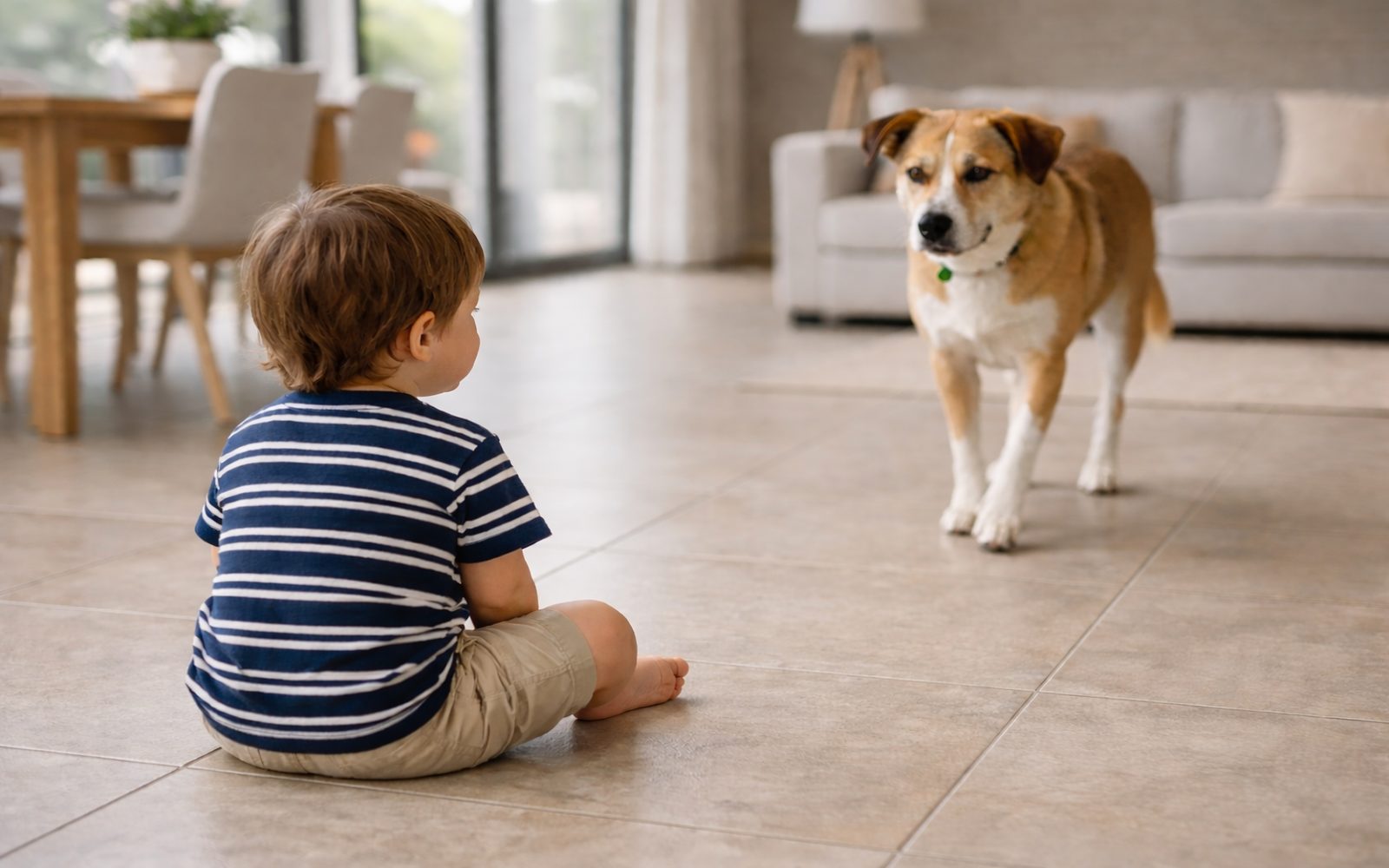
Tile flooring is a go-to option for busy homes thanks to its durability, moisture resistance, and easy maintenance. For households with kids and pets, though, safety matters just as much as appearance. One of the most overlooked factors when selecting tile is slip resistance, which plays a major role in preventing falls during everyday activities.
Understanding tile flooring slip ratings helps families choose surfaces that feel stable underfoot without giving up style.
Why slip resistance matters in active households
Children and pets don’t move carefully. They run, pivot, slide, and play—often on floors that may be wet from spills, bath time, or tracked-in moisture. Smooth tile surfaces that look beautiful in a showroom can become hazardous once real life kicks in.
Slip-resistant tile helps reduce the risk of falls by providing better traction, especially in homes with toddlers, seniors, or pets that may struggle on slick surfaces.
What tile slip ratings actually measure
Slip resistance is typically measured using the Coefficient of Friction (COF). This value indicates how much resistance a surface provides when pressure is applied, such as walking or running across it.
In simple terms, a higher COF means better grip. Tiles with appropriate COF ratings are designed to perform more safely in areas where moisture is common.
Making sense of COF numbers at home
Instead of focusing on technical standards, it helps to understand how COF values apply to everyday living:
0.60 or higher – Excellent traction, ideal for bathrooms, entryways, kitchens, and laundry rooms
0.50–0.59 – Suitable for general living areas with moderate activity
Below 0.50 – Best for dry, low-traffic spaces where water exposure is minimal
For homes with kids and pets, choosing tile with higher slip resistance offers extra peace of mind.
Tile finishes and how they affect traction
Slip resistance isn’t determined by rating alone. The surface finish of tile plays a big role in how safe it feels underfoot.
Polished tiles have a sleek, glossy look but tend to be more slippery when wet. Matte finishes provide better natural grip and are often preferred for family homes. Textured tiles add subtle surface variation that improves traction, making them especially helpful in high-activity areas.
When reviewing options within our tile flooring selection, finish should always be considered alongside color and design.
Wet areas need higher slip performance
Bathrooms, mudrooms, kitchens, and laundry rooms are where slip resistance matters most. These spaces see frequent moisture, and even small spills can create hazards on low-traction surfaces.
Tiles rated for wet conditions help maintain stability when floors are damp. This is especially important in homes with young children learning balance or pets that may slide when surfaces are slick.
Choosing the right slip rating room by room
Not every space requires the same level of traction. Matching slip resistance to how each room is used creates a safer, more comfortable home:
Bathrooms and laundry rooms benefit from the highest slip ratings
Kitchens and entryways need strong wet traction
Living areas and hallways can balance grip and comfort
Low-use rooms may allow more flexibility
Understanding these differences makes it easier to select tile that supports daily routines without overcomplicating the design.
Installation quality also affects safety
Even tile with excellent slip resistance can underperform if installed incorrectly. Poor leveling, uneven grout lines, or water pooling can all reduce traction.
Professional installation ensures tiles sit evenly, moisture drains properly, and grout spacing supports safe movement. These details work together with slip ratings to help flooring perform as intended over time.
Clearing up common misconceptions about slippery tile
Many homeowners assume all tile is slippery, but that isn’t the case. Modern tile options are available in a wide range of slip ratings and textures designed specifically for residential safety.
Learning how slip resistance works—and how it applies to real homes—helps avoid unnecessary compromises between safety and style. More details on how tile performance varies can be found in our tile flooring information guide.
Building safer spaces for everyday life
Slip ratings may seem like a small detail, but they make a meaningful difference in how safe and confident a home feels. For families with kids and pets, choosing the right tile helps support active living while reducing the risk of preventable accidents.
Thoughtful tile selection creates spaces that are durable, attractive, and comfortable for everyone who uses them.
Schedule a free in-home tile consultation today!
At Smitty’s Floor Covering, we help families choose tile flooring that balances safety, durability, and style. With free in-home measurements and decades of experience serving Denton County since 1958, we’re here to help make confident flooring decisions. Get started by reaching out through our contact page.


