

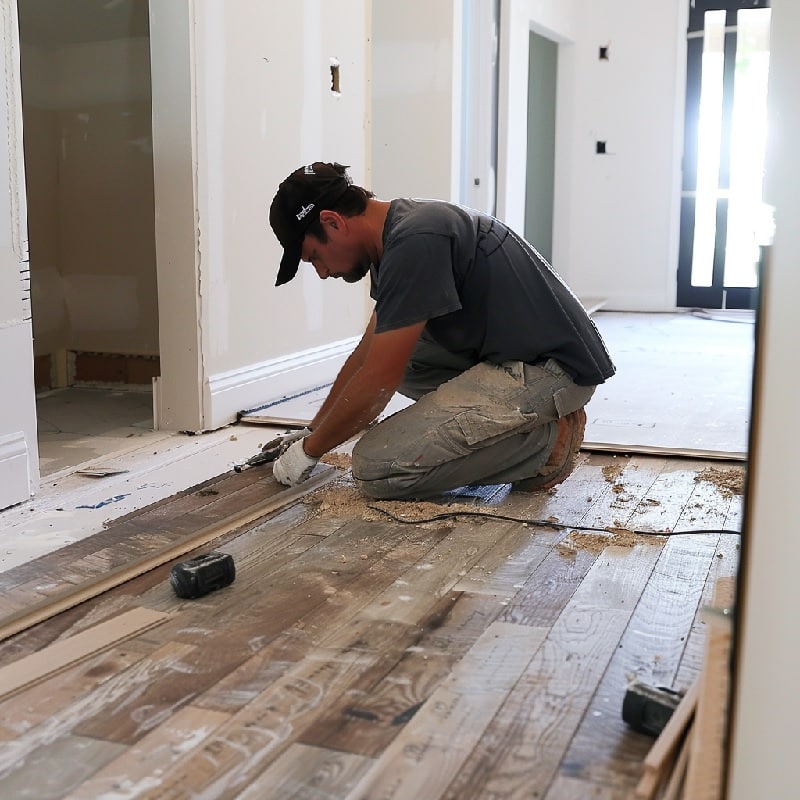
You've picked out the perfect floors. The samples looked great, the estimate came back within budget, and now you're standing in your living room wondering: how long until this place looks normal again?
That's the question nobody answers honestly enough. Online guides toss around phrases like "one to two days" as if every job is the same. In reality, the answer depends on what you're installing, what's underneath it, and whether the materials have had time to settle in. Let's walk through what actually determines your timeline — without the sugarcoating.
The Three Things That Actually Dictate Your Timeline
Flooring installation isn't a single event. It's a sequence of stages, and each one can stretch or shrink based on conditions you might not have considered.
Material type is the obvious starting point. Hardwood needs days of acclimation before a single plank goes down. Tile requires mortar to set and grout to cure. Even within the same product category, solid wood behaves differently than engineered, and large-format tile takes more finesse than standard squares.
Then there's what's under your current floors. If the subfloor is flat and clean, you're in great shape. If it isn't — and it often isn't in older homes — that's a day or more of leveling and repair before the main event can begin.
Finally, removal of the old flooring adds real time. Ripping out glued-down hardwood or chipping up ceramic tile is loud, dusty, and non-negotiable. Carpet comes out fast. Everything else takes patience.
Hardwood: The One People Always Underestimate
Here's where most timelines fall apart. Hardwood is a natural material, and it expands and contracts with humidity. You can't pull it off a truck and start nailing it down the same morning.
Acclimation is the silent time-eater. Solid hardwood typically needs three to seven days sitting in the room where it'll be installed, adjusting to the home's moisture levels. Skip this step and you'll get gaps in winter, buckling in summer — and no warranty to cover it.
Once the wood is acclimated, the actual installation moves fast. A skilled crew can lay several hundred square feet in a day or two, depending on the layout and whether baseboards need to come off. Prefinished planks let you walk on them that evening. Site-finished flooring, on the other hand, adds days for sanding, staining, and multiple coats of polyurethane — each needing time to dry.
The realistic window for a standard hardwood job runs five to ten days from delivery to furniture moving back in. It's worth every day of waiting, but it helps to know that going in. When you're still weighing species and finish, our hardwood collection lets you compare everything from oak to hickory so you know what you're working with before the clock starts.
Tile: Slower Than You'd Think, Worth the Wait
Tile has its own rhythm, and it's not one you can rush. The process breaks into three distinct phases: laying the backer board, setting each piece in mortar, and grouting once everything has cured.
Mortar needs time to harden — not just dry. Walking on freshly set tile too soon shifts the pieces and compromises the bond. Most installers recommend staying off the floor for at least 24 hours after setting, and longer for large-format tiles where the mortar bed is thicker. Grout adds another day or two before the surface is fully sealed and ready for foot traffic.
Bathrooms compound the timeline. Cutting around toilets, vanities, and awkward corners takes precision, and waterproofing underneath is non-negotiable. A straightforward bathroom floor might wrap in three to four days, while a full shower surround with floor-to-ceiling tile pushes closer to a week.
For anyone weighing tile against other materials, browsing our tile catalog gives you a sense of the variety — from porcelain to ceramic — and how each style affects installation complexity.
One Step That Saves Days on the Back End
The single biggest timeline derailment comes from something that happens before installation even begins: inaccurate measurements. A room that's five inches longer on one side than the other, a closet door that swings lower than expected, a transition height that doesn't line up — these aren't rare edge cases. They're everyday reality in homes across Denton County.
An in-home measurement catches these quirks early. It also gives your installer the exact quantities they need, which means no mid-job runs back to the warehouse and no delays waiting on an extra box of planks. We've been sending someone to measure in person for decades because it prevents the kind of surprises that stretch a three-day job into a week. When you're ready to pin down your own timeline, schedule a free in-home measurement and we'll map out exactly what your space needs.
A Realistic Recap
So how long does it actually take? For hardwood, expect five to ten days from material delivery to finished floors. Tile lands in a similar range — three to seven days for most rooms, with bathrooms on the longer end. Both timelines assume the subfloor cooperates and the old flooring comes out without a fight.
The common thread is this: the parts you can't see — acclimation, curing, leveling — eat up more time than the installation itself. Good crews won't cut corners on any of them, and that's exactly what you want.
When you're ready to get started, request a free estimate and we'll give you a timeline specific to your space, your materials, and your schedule.


