

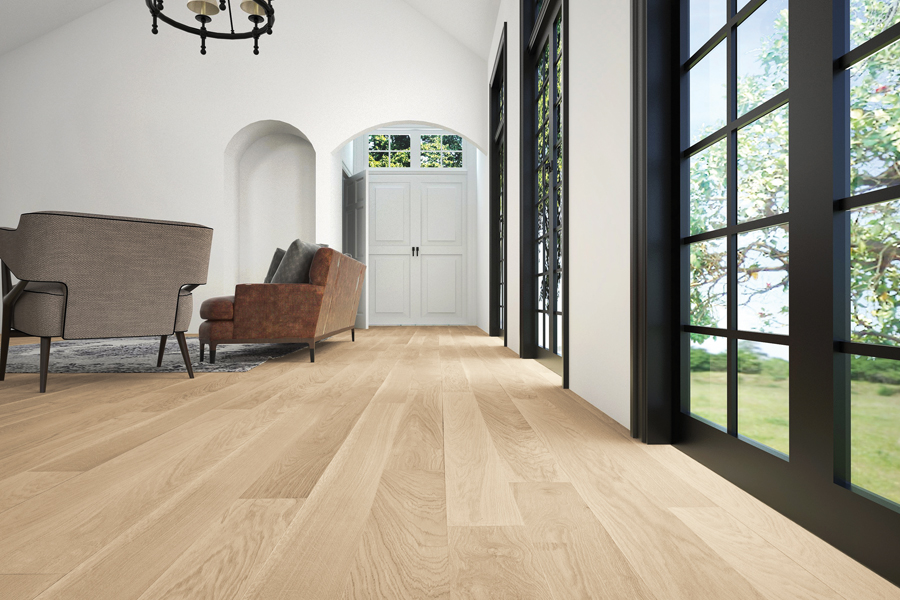
If you’ve lived through a North Texas summer with hardwood under your feet, you’ve probably noticed it: doors getting a little sticky, a faint gap between a couple of boards, maybe even a slight cupping in a sunny room. Wood is a natural material, so it reacts to heat and moisture just like a tree would. Understanding how that works is the key to keeping your floors looking great year after year.
How Heat and Humidity Affect Hardwood
Hardwood planks constantly take in and release moisture from the air. When the air is humid, boards swell; when the air is dry, they shrink. That movement is normal, but big swings in indoor conditions can create visible problems.
In our climate, you’ll usually see three common symptoms. Slight gaps may open between boards during drier periods, especially near vents or fireplaces. Cupping can appear when the underside of the plank is more humid than the top, making the edges curl upward. In more extreme cases, crowning happens when the center of the board rises higher than the edges after prolonged moisture exposure.
Most manufacturers recommend keeping indoor relative humidity roughly in the 35–55% range. Staying close to that band helps your floors expand and contract gently instead of suddenly, which is when warping, cracking, and noisy squeaks tend to show up.
If you’re still planning your project, choosing the right material helps too. You can compare species, constructions, and finishes in our hardwood collection to see which options handle movement best for busy homes.
Seasonal Shifts: What’s Normal and What Isn’t
North Texas homes go through big seasonal swings: air conditioning running hard in summer, heaters drying the air in winter, storms rolling through with sudden humidity spikes. Your floors feel all of that.
In cooler, drier months, minor gaps—especially between wider planks—are usually nothing to worry about. They often close back up when the air gets more humid. On the flip side, during long humid stretches, it’s common for boards near exterior doors, kitchens, or bathrooms to show very slight cupping that settles once things dry out.
What you want to watch for are changes that keep getting worse. Gaps large enough to trap debris, boards that feel spongy underfoot, or planks that stay cupped or crowned even after the weather evens out are red flags. If you ever see dark staining along seams, that can indicate moisture has been sitting in or under the floor.
Proper acclimation before installation goes a long way toward preventing these issues. If you’re curious how that works, our installation guide explains how we let materials adjust to your home before they’re nailed or glued down.
Everyday Habits That Protect Your Floors
You don’t need a complicated routine to keep hardwood healthy in our climate. A few consistent habits make a big difference.
Start with moisture control. Wipe up spills immediately, don’t let wet shoes sit on the floor, and use rugs at entryways to catch rainwater or melted ice. In kitchens and near sinks, runners can help catch splashes before they find their way into seams. If you run a humidifier in winter or a dehumidifier in summer, check the settings so you’re not pushing humidity too far in either direction.
Next, think about surface protection. Use felt pads under furniture, avoid dragging heavy items, and keep pet nails trimmed. Regular dry dusting or vacuuming with a hardwood-safe attachment removes grit that can scratch the finish. When you do damp-mop, use a cleaner made for wood and a well-wrung pad—“damp, not wet” is the rule.
If you have adjoining areas that see more water—like bathrooms or laundry rooms—it can sometimes make sense to pair hardwood with more moisture-tolerant surfaces. Looking at tile or luxury vinyl for those spaces alongside solid wood elsewhere can give you a balanced, practical layout; our flooring inspiration galleries are a helpful place to see how other homeowners mix materials.
When to Call in a Professional
Because hardwood is an investment, it’s worth getting a second opinion when something doesn’t look or feel right. Persistent cupping, buckling, or boards that separate from the subfloor usually point to a moisture problem that needs to be identified, not just covered up. A pro can check for leaks, subfloor issues, or HVAC-related causes before recommending repairs.
If your existing floors are in good shape structurally but just look tired, refinishing or targeted board replacement might bring them back to life. And if you’re already considering new flooring, having a specialist visit the home helps match the product to your actual conditions—sun exposure, room layout, and how your family really lives in the space. Our free in-home measurement service is set up specifically to look at those details before you commit.
Hardwood and North Texas weather can absolutely get along—you just need to understand how wood behaves and give it a stable, well-cared-for environment. Manage moisture, keep an eye on seasonal changes, and address anything unusual early, and your floors will stay beautiful for decades. When you’re ready to talk through options or get help with a concern you’re seeing, you can request a free estimate and we’ll walk you through the next steps.


