

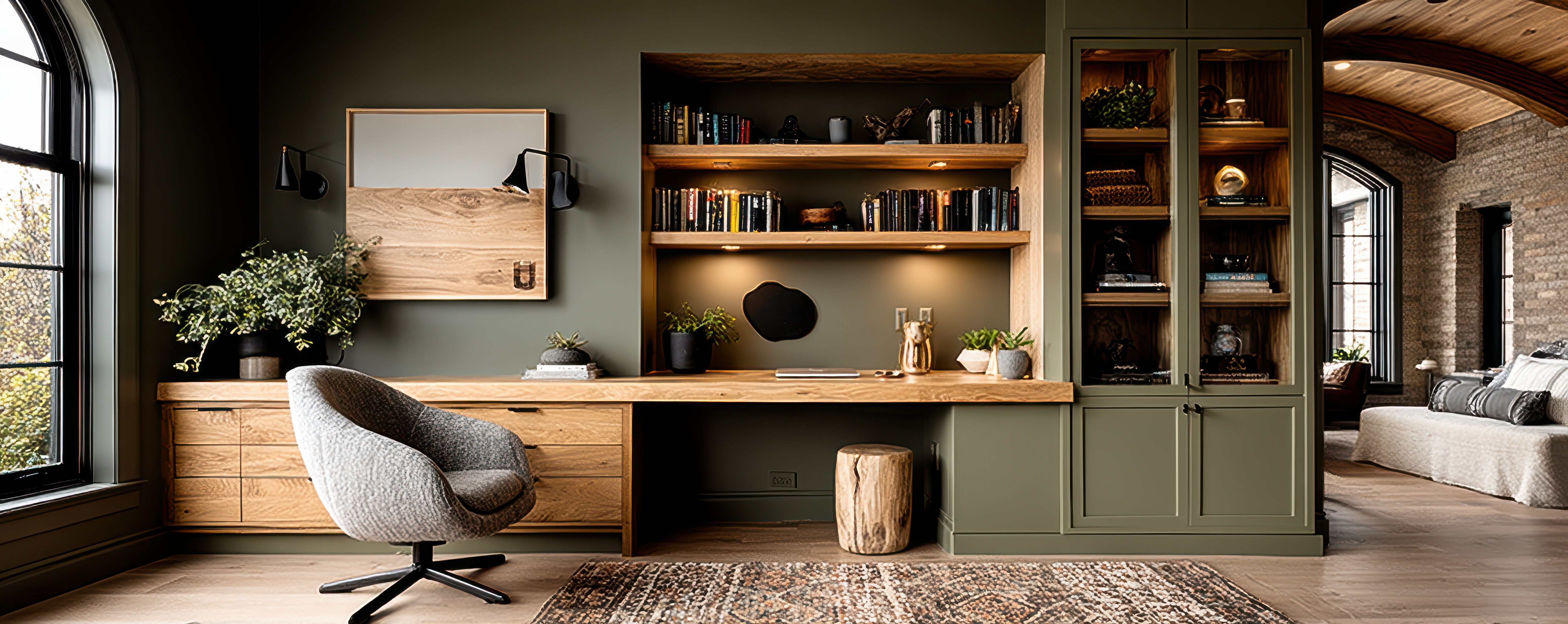
You settle into your desk chair at 8:30 a.m., coffee in hand, ready to tackle the day. Then it starts: the echo of your voice on that morning conference call, the clack of the keyboard bouncing off bare walls, the hard surface that has your feet aching by noon. When your dining table became a desk a few years back, nobody handed out a manual on making that space work for eight hours straight. Yet here we are — and the floor beneath you has more to do with your daily comfort and focus than you might think.
Why Carpet Transforms a Workspace
Few materials shape a room's atmosphere as immediately as carpet does. Hard surfaces reflect sound, turning a modest workspace into a cavern of echoes that every person on the other end of a video call notices. It absorbs those reflections at the source — footfall, chair movement, ambient conversation — so your voice comes through clearly and your downstairs neighbors stay friendly.
Beyond the acoustics, there's the physical relief of stepping onto something cushioned rather than unyielding. When you're clocking eight or nine hours, that difference compounds. Modern options come in dense cut piles that feel plush underfoot, low-profile loops that let a chair roll smoothly without matting, and textured friezes that shrug off vacuum tracks between cleanings. Stain-resistant technologies like Mohawk's SmartStrand mean the occasional coffee spill doesn't turn into a permanent reminder of that 3 p.m. slump. You can compare textures and performance features in our carpet catalog to find what suits the way you actually use the room.
When Hardwood Feels Like the Right Fit
Of course, some people prefer a hard surface under a rolling chair — and that's where hardwood enters the equation. It brings warmth and permanence to a workspace in a way few other materials replicate. An area rug layered in exactly where you sit gives you the best of both worlds: the elegance of wood with the sound-dampening of textile right where it counts. Species like hickory and white oak hold up especially well under desk chairs, and a matte finish hides the occasional scuff far more gracefully than a high-gloss sheen ever will. If that direction appeals to you, our hardwood collection includes species and finishes suited for everything from bright, modern studies to traditional dens.
The Installation Makes the Difference
Whatever direction you choose, the install is what determines whether the floor performs the way it should. A home office is rarely a perfect rectangle — it has baseboards, closet pockets, door swings, and maybe an awkward alcove where your filing cabinet lives. In older Denton homes especially, those quirks can multiply. Getting someone out to measure the actual footprint eliminates the guesswork that leads to shortages or waste. Our free in-home measurement accounts for every cut, corner, and clearance so the numbers are right from the start. Once materials are on site, proper acclimation and subfloor prep keep the long-term result looking as good as the sample you fell in love with. You can see what goes into a professional install in our installation guide, which covers everything from that first site visit to the final walk-through.
A Floor That Works as Hard as You Do
A home office should earn its square footage, and the floor sets the foundation — literally — for how the room sounds, feels, and functions across a full workday. Whether you land on carpet that quiets the space and cushions every step, or hardwood that anchors it with timeless character, the right choice turns a spare bedroom or corner nook into a place where you genuinely want to spend your time. When you're ready to explore what's possible, request a free estimate and we'll help you build a workspace that makes those 8:30 a.m. coffee moments feel a whole lot better.


