

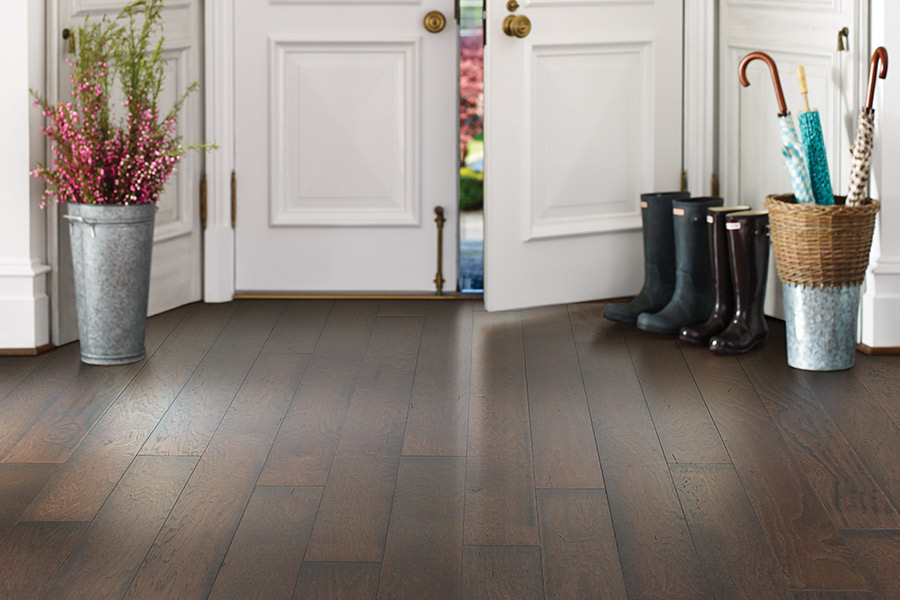
You know the drill. It rains for twenty minutes, the ground turns to clay soup, and suddenly your entryway looks like a crime scene with a boot-shaped suspect. Between the red dirt, the sudden downpours, and the fine dust that settles on everything during dry spells, the first few square feet inside your door take more abuse than the rest of the house combined. If the flooring in your entry or mudroom isn't up to the task, you'll spend more time scrubbing than living.
Porcelain Tile: The Heavyweight Champion of High-Traffic Entryways
When it comes to sheer toughness, nothing beats a well-installed porcelain tile. It shrugs off water, grit, and the kind of abuse that would send hardwood into early retirement. Unlike natural stone, porcelain has an incredibly low absorption rate — meaning muddy paw prints and wet boots won't seep into the material and leave behind permanent reminders of last spring's storm season.
What makes tile especially practical for Denton County homes is how little maintenance it demands. A quick sweep and an occasional mop are all it takes to keep things looking clean, even when the outdoors has other plans. And if you choose a surface with subtle texture or a matte finish, you get slip resistance without sacrificing style. From wood-look planks that warm up a farmhouse entry to large-format porcelain that makes a small mudroom feel expansive, the tile catalog carries options that blur the line between durable and beautiful.
The real secret, though, is the grout. Go with a darker shade — charcoal, taupe, or a warm gray — and you'll skip the frustration of watching light grout lines turn reddish-brown after one rainy week. Epoxy-based grouts also resist staining far better than traditional cement-based varieties, which matters when every visitor tracks in a fresh sample of local soil.
Luxury Vinyl: The Softer, Quieter Contender
Tile isn't the only material that can handle a mudroom's worst day. Luxury vinyl plank has carved out a serious reputation for itself in entryways and laundry-to-garage transitions, and for good reason. It's fully waterproof, installs with tight seams that don't give dirt a place to hide, and feels noticeably warmer and quieter underfoot — a small comfort that adds up when you're kicking off boots in January.
The other advantage worth mentioning is the sheer range of looks available. Luxury vinyl convincingly mimics hardwood grain, natural stone, and even patterned tile, so you're never stuck choosing between performance and the aesthetic you actually want. Many homeowners across North Texas pair it with tile in adjacent rooms, letting each material shine where its strengths matter most. Our luxury vinyl collection includes rigid-core options from Mohawk and Mannington that won't buckle when temperature swings send humidity climbing.
What Makes an Entryway Floor Actually Last
Picking the right material is half the battle. The other half is what happens underneath and around it. Subfloor preparation matters enormously in entryways, where uneven settling or moisture migrating up through slab foundations can telegraph straight to the surface if corners get cut. A thorough installation guide walks through what proper prep looks like — from acclimating materials to accounting for door clearances — but the short version is this: a floor is only as good as what lies beneath it.
Mudrooms also benefit from thoughtful transitions. Where tile meets carpet or luxury vinyl meets hardwood, a well-placed threshold strip keeps dirt from migrating and makes sweeping dramatically easier. And don't overlook the baseboards — sealed, scrubbable trim means one less surface for grime to settle into.
Design That Works Smarter, Not Harder
A hardworking floor can look great without making you its full-time custodian. A few principles hold up especially well under real-life conditions:
- Pattern hides debris. A tile with subtle color variation or a stone-look vinyl with natural veining camouflages dust and crumbs between cleanings far better than a solid, uniform surface ever could.
- Matte finishes forgive. High-gloss floors show every footprint and water spot. A matte or low-luster finish keeps the focus on the room, not the mess.
- Larger formats mean fewer seams. Whether it's oversized porcelain or long vinyl planks, fewer grout lines and joints translate to fewer places for dirt to collect — and less time spent with a scrub brush.
A Floor That Pulls Its Weight
Your entryway works harder than nearly any other surface in the house. It deserves flooring that can keep pace — whether that's a porcelain tile that shrugs off mud without complaint or a luxury vinyl plank that stays warm and quiet through every season. The right choice comes down to how your household moves through the door each day, and the best way to figure that out is to see and feel the options in person. When you're ready, request a free estimate and we'll help you land on a floor that handles the grit and still looks like home.


